Skip to content

Quel était le poids d’un œuf au XVIIIe siècle?

  • Painting of a girl in a red holding a wicker basket of a ton of eggs. A rooster is in the right corner.

1 once 6 gros c’est à dire 53 g! Comme nous! D’après Buffon.

Et entre 1 once 6 gros à 2 onces 2 gros, soit environ 53,5 g à presque 69 g selon Cours complet d’agriculture, article ŒUFS de l’abbé Rozier en 1805 (soit légèrement après le 18e siècle).

La variation du poids des œufs trouvée chez Rozier est dû au fait que selon l’âge de la poule, la grosseur des œufs varie.

Bref, du coup, pas besoin de se prendre la tête avec le poids des œufs, c’était pareil à l’époque.
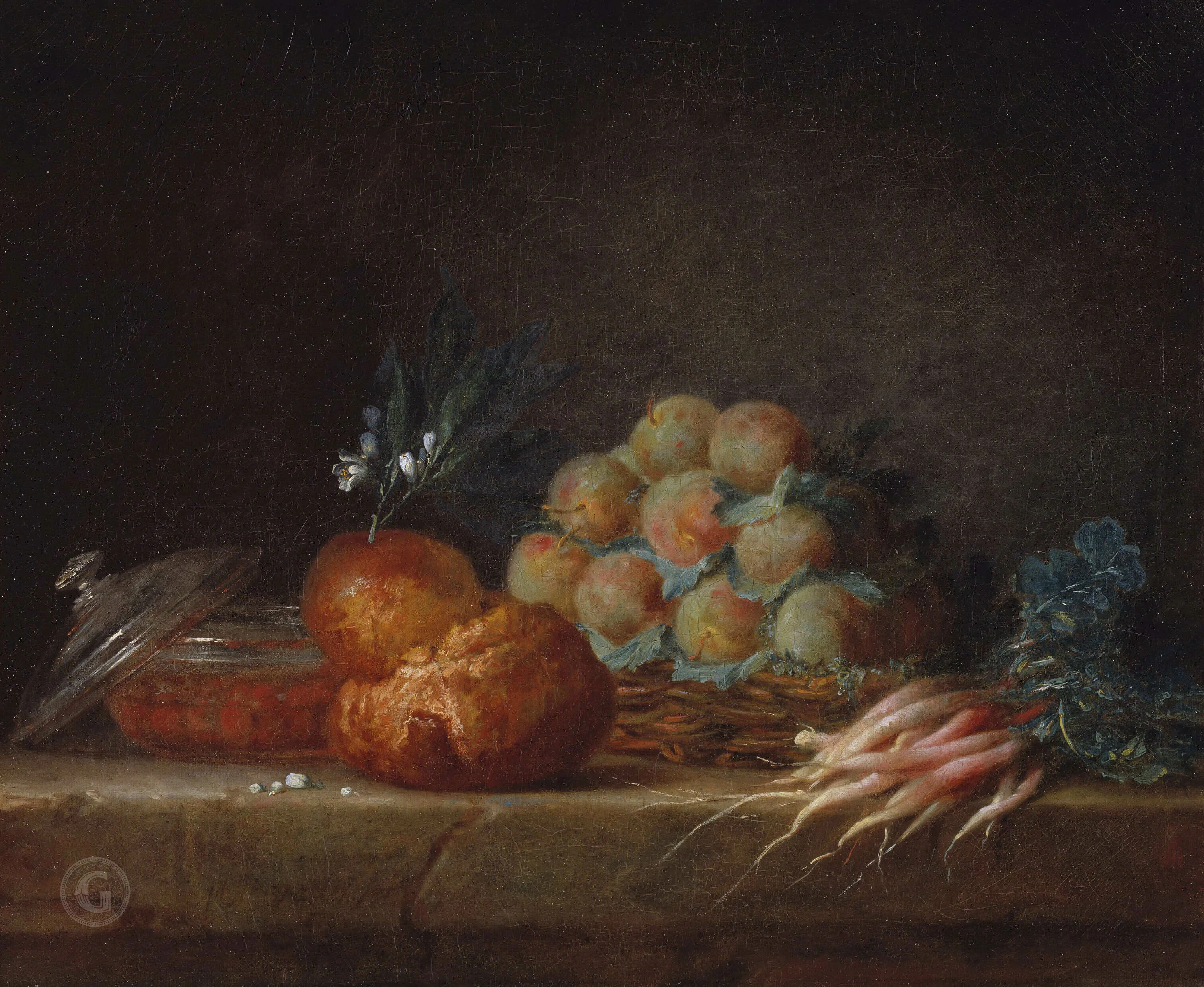
Marie Antoinette’s Brioche?

An investigation into an 18th-century recipe that eludes me

Recreating an 18th-century brioche when the texts, measurements, techniques, and images never provide a complete answer.

Nature morte avec brioche, fruits et légumes, 1775, Anne Vallayer-Coster, available at the Louvre.

“Let them eat brioche!”

Even though this phrase is wrongly attributed to Marie Antoinette and is better known among our Anglo-Saxon neighbors as “Let them eat cake, ” it reflects just how much of a star brioche was at the time. I’m sure everyone was fighting over it. Oh! That suddenly makes me want to eat some. With jam or as French toast? Hard to choose.

But what did this brioche actually look like?

Continue reading — Marie Antoinette’s Brioche?→